Training Guides / Exercise library
The plank and core bracing
The plank teaches the core to resist movement, which is what it mostly does in lifting. Learn proper form, why longer holds are not always better and the best progressions.
The plank is a simple hold in a push-up-like position, usually on the forearms. It trains the muscles around the trunk to keep the spine still while something tries to move it, in this case gravity pulling the hips toward the floor. That ability, called bracing, is exactly what you need under a heavy squat, deadlift or press.
General fitness education only. If you have back pain or are pregnant or postpartum, get advice from a qualified professional on core training.
What the core actually does
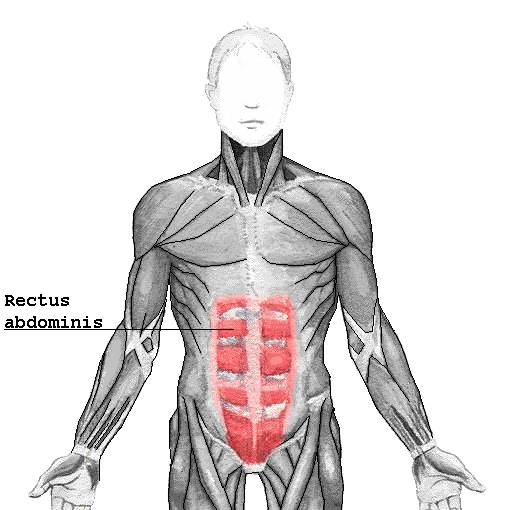
The "core" includes the rectus abdominis (the six-pack muscle), the obliques on the sides, the deep transverse abdominis, the spinal erectors and the muscles around the hips. In daily life and in lifting they mostly resist movement:
| Core job | Example exercise |
|---|---|
| Anti-extension (stop arching) | Plank, ab wheel rollout, dead bug |
| Anti-lateral flexion (stop leaning sideways) | Side plank, suitcase carry |
| Anti-rotation (stop twisting) | Pallof press, bird dog |
| Flexion (curl the spine) | Crunch, hanging knee raise |
A well-rounded core program uses something from each row.
Perfect plank form
- Forearms on the floor, elbows under the shoulders.
- Legs straight, feet about hip width.
- Squeeze the glutes hard and tuck the pelvis slightly, as if pulling your belt buckle toward your chin.
- Brace the abs and keep breathing in short breaths behind the brace.
- Push the floor away so the upper back is not sagging between the shoulder blades.
- Head neutral, eyes on the floor just ahead of the hands.
Common mistakes
- Hips sagging, which shifts the load into the lower back.
- Hips piked high to make it easier.
- Holding the breath for the whole set.
- Chasing minutes. Once you can hold a strong plank for about 60 seconds, longer holds mostly test patience. Make it harder instead.
Progressions
- Easier: plank on the hands, plank on an incline, or from the knees.
- Harder: the RKC-style plank (maximum tension for 10 to 20 seconds), long-lever plank with elbows further forward, plank with alternating arm or leg lifts, body saw, ab wheel rollout.
- Side plank: forearm under the shoulder, body straight, hips high. Build to 30 to 45 seconds per side.
How to use it
Add core work two or three times a week at the end of a session: for example 3 sets of 20 to 40 seconds of a challenging plank variation plus one anti-rotation or carry exercise. Heavy compound lifts also train the core hard, so you need less isolated ab work than many people think.
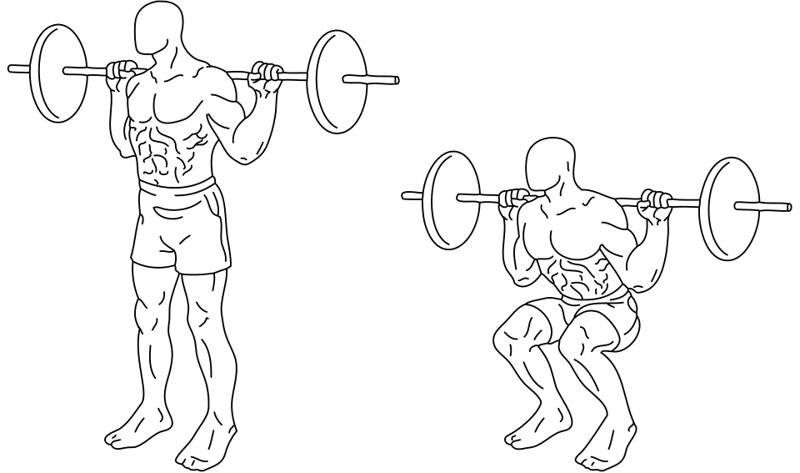
Practice the same brace you use in the plank before every heavy rep of the squat and deadlift: big breath into the belly, tighten, then move.
See the core guide for more exercises and weekly targets.