Training Guides / Exercise library
The overhead press
Pressing a barbell from the shoulders to overhead while standing builds strong shoulders, triceps and a stable trunk. Here is how to set up, press and avoid the common faults.
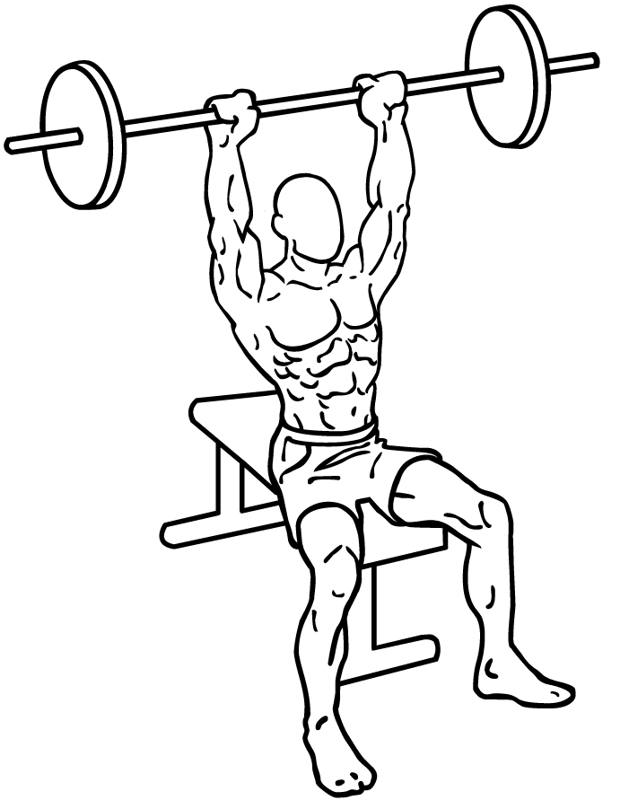
The overhead press, also called the standing press or strict press, is one of the oldest strength tests in the gym. You start with the bar on the front of your shoulders and press it straight up until your arms are locked out overhead. Most people press far less than they bench, and progress is slow, which makes every small jump satisfying.
General fitness education only. If you have shoulder pain or limited overhead mobility, see a qualified professional first.
Muscles worked
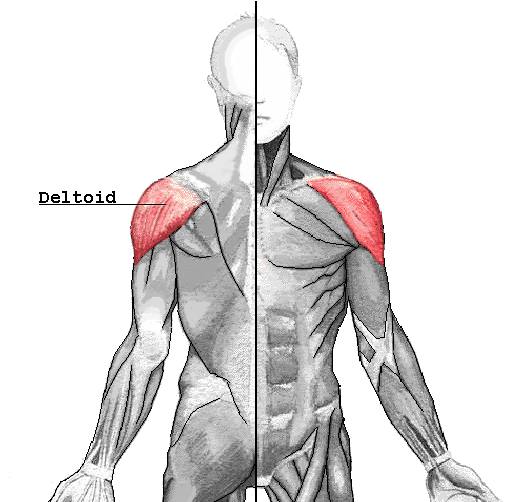
The deltoids, especially the front and side portions, do most of the work. The triceps finish the lockout. The upper trapezius and serratus anterior rotate the shoulder blades upward so the arm can reach overhead. Because you are standing, the abs, glutes and legs work hard to keep the body still, so the press doubles as a trunk exercise.
Setup
- Set the bar in the rack at about upper-chest height.
- Grip slightly wider than shoulder width, with forearms vertical when viewed from the front.
- Unrack the bar so it rests on the front of the shoulders, elbows slightly in front of the bar.
- Stand with feet about hip width apart. Squeeze the glutes and brace the abs.
Form cues
- Head back, then through. Pull your chin back slightly so the bar passes your face in a straight line, then push the head forward under the bar once it clears your forehead.
- Bar path is vertical. The bar finishes over the middle of your feet, stacked over shoulders and hips.
- Lock out fully and shrug slightly at the top.
- No leg drive on a strict press. If you dip and drive with the knees, it becomes a push press, which is a separate exercise.
- Lower to the same spot on the shoulders every rep.
Common mistakes
| Mistake | What it looks like | Fix |
|---|---|---|
| Excessive lean back | Lower back arches, press turns into an incline press | Squeeze glutes, tighten abs, reduce load |
| Bar drifting forward | Bar ends in front of the face | Move head through after the bar passes |
| Wrists bent back | Bar sits on the fingers | Bar low in the palm, over forearm bones |
| Partial lockout | Elbows stay bent at the top | Finish every rep fully |
Variations
- Seated dumbbell press. Removes the balance demand and lets each arm move freely.
- Half-kneeling single-arm press. Kind to stiff shoulders and great for core control.
- Landmine press. Presses at an angle, a good option if overhead pressing is uncomfortable.
- Push press. Uses a small knee dip to move heavier loads and train power.
- Pike push-up. A bodyweight version for home training.
Programming tips
Because the shoulders are small muscles, progress is measured in small jumps. Fractional plates of 0.5 to 1 kg (1 to 2.5 lb) help a lot. Three sets of 5 to 8 reps twice a week works well for beginners. Many programs alternate press and bench press days so each gets enough recovery; see upper/lower.
If you cannot raise your arms straight overhead without arching your back, work on thoracic and shoulder mobility and use the landmine press until it improves. Our mobility guide has simple drills.