Training Guides / Exercise library
The barbell back squat
How to set up, brace and squat with a barbell, which muscles it trains, the most common mistakes and the variations that suit different bodies and goals.
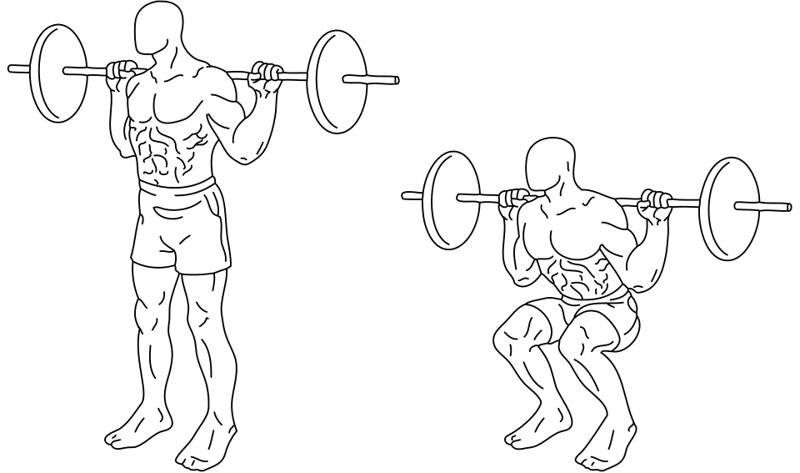
The squat is the foundation of lower-body strength. It trains you to sit down and stand up under load, a pattern you use every day getting out of a chair or lifting a box off the floor. Done well, it builds the thighs, hips and trunk at the same time.
This guide is general fitness education, not medical advice. If you have pain, a past injury or a health condition, get cleared by a doctor or physical therapist before loading the squat.
Muscles worked
| Muscle | Role in the squat |
|---|---|
| Quadriceps (front of thigh) | Straighten the knee as you stand up |
| Gluteus maximus | Extends the hip, strongest out of the bottom |
| Adductors (inner thigh) | Help extend the hip, especially in deep squats |
| Spinal erectors and abs | Keep the torso rigid so force reaches the bar |
| Calves and hamstrings | Stabilize the knee and ankle |
Setup
- Set the bar in the rack at about mid-chest height so you can unrack it with a small knee bend.
- Step under the bar and place it on the upper back, resting on the meaty part of the trapezius (high bar) or a little lower across the rear shoulders (low bar).
- Grip the bar just outside the shoulders, squeeze it, and pull your elbows down slightly to tighten the upper back.
- Stand up to lift the bar out, take two or three short steps back, and set the feet about shoulder width apart with the toes turned out 15 to 30 degrees.
Form cues for each rep
- Brace first. Take a big breath into the belly, then tighten the abs as if someone were about to poke you. Hold that breath through the hardest part of the rep.
- Break at hips and knees together. Sit down between your heels rather than straight back.
- Knees track over the toes. Let them travel forward as far as they need to; just keep them pointing the same direction as the feet.
- Whole foot on the floor. Weight stays balanced over mid-foot, heels down.
- Depth. Aim for the hip crease to reach at least the level of the top of the knee, as long as you can keep your back position.
- Drive up. Push the floor away and lead with the chest so the hips and shoulders rise at the same rate.
Common mistakes
- Knees caving in on the way up. Cue "spread the floor" with your feet and use a weight you can control.
- Hips shooting up first so the squat turns into a good morning. Usually the load is too heavy or the brace was lost.
- Cutting depth as the weight goes up. Film a set from the side to check honestly.
- Losing the brace by breathing out at the bottom. Exhale near the top instead.
- Heels rising. Widen the stance slightly, turn the toes out more, or try small heel wedges or lifting shoes.
Variations
| Variation | Why choose it |
|---|---|
| Goblet squat | Best teaching version. Dumbbell or kettlebell held at the chest keeps you upright |
| Front squat | Bar on the front of the shoulders, more quad and upper-back demand |
| Box squat | Sitting to a box teaches consistent depth and control |
| Safety-bar squat | Easier on stiff shoulders and wrists |
| Split squat | Single-leg work, see the lunge guide |
Programming and safety
For strength, 3 to 5 sets of 3 to 6 reps works well. For muscle growth, 3 to 4 sets of 6 to 12 reps close to failure is a sensible default. Beginners can often add 2.5 to 5 kg (5 to 10 lb) per session for several weeks before progress slows; see progressive overload.
Always squat inside a power rack with the safety pins or straps set just below your bottom position, or use a spotter. If a rep fails, sit down onto the pins rather than trying to dump the bar behind you.
Squat two or three times per week as part of a full-body program, warm up with a few lighter sets, and log every session so you know what to beat next time.