Training Guides / Exercise library
The bench press
How to set up on the bench, where to touch the bar and how to press safely, with the muscles worked, common mistakes and dumbbell and incline variations.
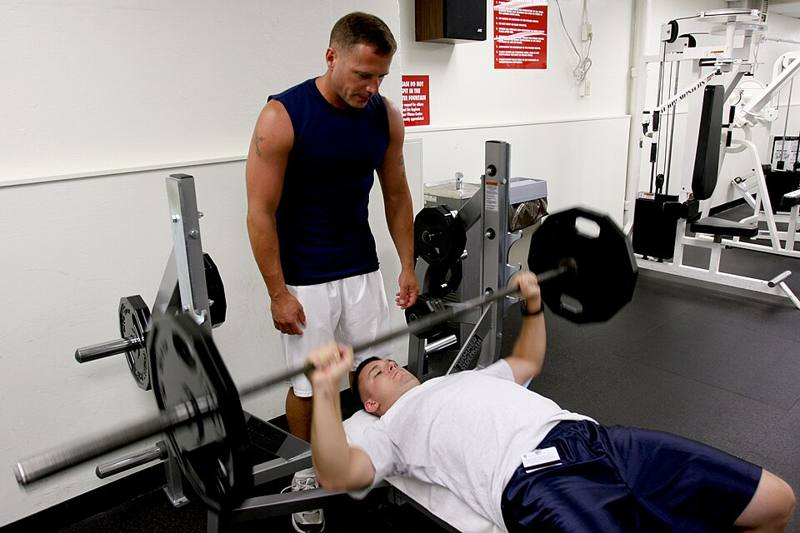
The bench press is the most popular upper-body strength lift. You lie on a flat bench, lower a barbell to your chest and press it back up. It builds the chest, the front of the shoulders and the triceps, and it is easy to measure progress on.
General education only, not medical advice. If you have shoulder pain, get it checked before pressing heavy.
Muscles worked
| Muscle | Role |
|---|---|
| Pectoralis major (chest) | Main mover: brings the upper arm across and forward |
| Anterior deltoid (front shoulder) | Assists the chest throughout |
| Triceps | Straighten the elbow, most important near lockout |
| Upper back and lats | Create a stable base and control the bar path |
Setup
- Lie on the bench with your eyes directly under the bar.
- Grip the bar so your forearms are vertical when the bar touches your chest. For most people that is a little wider than shoulder width.
- Pull your shoulder blades back and down, as if tucking them into your back pockets. Keep them there for the whole set.
- Plant your feet flat on the floor. A small natural arch in the upper back is normal.
- Unrack the bar with straight arms and move it over the shoulders.
Form cues
- Lower under control to the lower chest, roughly level with the nipples or a bit below.
- Elbows at about 45 to 70 degrees from the body. Not flared straight out, not tucked tight.
- Touch, do not bounce. A light touch keeps the reps honest and protects the sternum.
- Press up and slightly back so the bar finishes over the shoulders again.
- Leg drive. Push your feet into the floor to keep the whole body tight, but keep your hips on the bench.
Common mistakes
- Flared elbows that put the shoulder in a weak position. Bring them in a little.
- Loose shoulder blades. If they roll forward, the shoulders take more stress and the press gets weaker.
- Bouncing the bar off the chest to move more weight.
- Butt lifting off the bench, which shortens the range and is against the rules in competition.
- Wrists bent back. Stack the bar over the forearm bones with the bar low in the palm.
Variations
| Variation | Use it for |
|---|---|
| Dumbbell bench press | More range of motion, each side works independently |
| Incline bench (30 to 45 degrees) | More upper chest and front shoulder |
| Close-grip bench | More triceps |
| Push-up | Bodyweight option anywhere; see the push-up guide |
| Machine chest press | Easy to learn and safe to push to failure |
Safety
Never bench heavy alone without protection. Use a spotter, set the safety arms of a rack just below chest height, or use dumbbells, which you can lower to the sides. Do not use a "thumbless" grip; wrap your thumbs around the bar.
Warm up with an empty bar and two or three lighter sets before your working weight. If the bar ever stalls on your chest with no spotter or safeties, tilt it to one side to slide plates off rather than trying to roll it down your body.
Programming
Beginners can bench two or three times a week, for 3 sets of 5 to 8 reps, adding a small amount (1 to 2.5 kg or 2.5 to 5 lb) when all sets are completed with good form. Pair it with rows or pull-ups so the back keeps pace with the chest, as covered in the chest guide.