Training Guides / Muscle group guides
Back training guide
The back is a group of muscles that pull, stabilize and protect the spine. Learn the main muscles, the best exercises for width and thickness, and weekly volume targets.
"Back" covers many muscles: the wide latissimus dorsi (lats) along the sides, the trapezius across the upper back and neck, the rhomboids between the shoulder blades, the rear deltoids, the teres major and the spinal erectors running along the spine. A strong back improves posture, protects the shoulders and supports every heavy lift.
The main muscles and what they do
| Muscle | Main job | Trained by |
|---|---|---|
| Latissimus dorsi | Pulls the arm down and back | Pull-ups, pulldowns, rows, pullovers |
| Trapezius (upper, middle, lower) | Elevates, retracts and rotates the shoulder blades | Shrugs, rows, face pulls, overhead work |
| Rhomboids | Pull the shoulder blades together | Rows, rear delt work |
| Rear deltoids | Pull the arm backward | Face pulls, rear delt flys, wide rows |
| Spinal erectors | Keep the spine straight, extend the back | Deadlifts, RDLs, back extensions |
Width vs thickness
Lifters often split back training into width (vertical pulling that builds the lats, giving a V shape) and thickness (horizontal pulling that builds the mid-back). In reality all pulling trains the lats to some degree, but including both directions gives the most complete development.
| Vertical pulls (width) | Horizontal pulls (thickness) |
|---|---|
| Pull-up and chin-up | Barbell row |
| Lat pulldown | One-arm dumbbell row |
| Single-arm cable pulldown | Chest-supported row |
| Straight-arm pulldown | Seated cable row |
How much volume?
For most intermediate lifters, roughly 10 to 20 hard sets per week for the lats and upper back is a good range, spread over two or more sessions. Many coaches recommend at least as many pulling sets as pressing sets to keep the shoulders balanced.
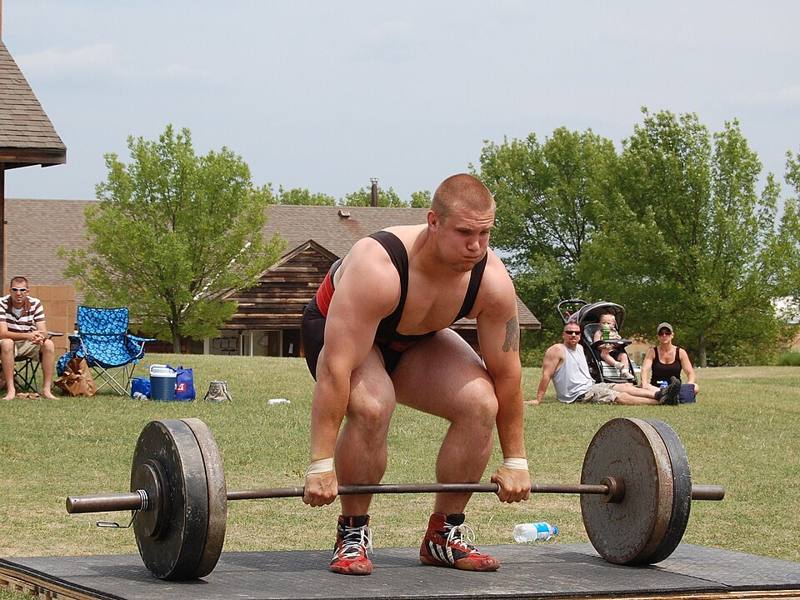
Heavy deadlifts and RDLs train the spinal erectors hard, so most people need little direct lower-back work beyond them.
Sample weekly back work
| Session | Exercise | Sets x reps |
|---|---|---|
| Day 1 | Pull-up (add weight when strong) | 3 x 6-10 |
| Day 1 | Barbell row | 3 x 8-10 |
| Day 2 | Lat pulldown | 3 x 10-12 |
| Day 2 | Chest-supported row | 3 x 10-12 |
| Day 2 | Face pull | 3 x 15-20 |
Technique tips
- Start each rep with the shoulder blades. Pull them down (vertical) or back (horizontal) before bending the elbows.
- Think elbows, not hands. Drive the elbows down or back; the hands just hold on.
- Control the stretch. Let the shoulder blades move forward fully at the bottom of rows and pulldowns.
- Use straps on heavy rows if grip gives out before your back does.
Common problems
Feeling it all in the arms. Use a thumbless or lighter grip, slow down and focus on the elbows.
Lower back fatigue from rows. Switch to chest-supported or cable rows.
Rounded shoulders posture. More pulling and rear delt work, plus mobility for the chest and upper back, often helps.
If you can do only one back exercise at home, make it pull-ups or inverted rows. See the home program.